
AIX supply
Equipment and functions expressly listed in the approved commercial and technical scope.
A complete line is not an equipment list. It is a project-confirmed production path from material and primary packing requirements to qualified packs, inspection, secondary packaging and the agreed factory handoff.
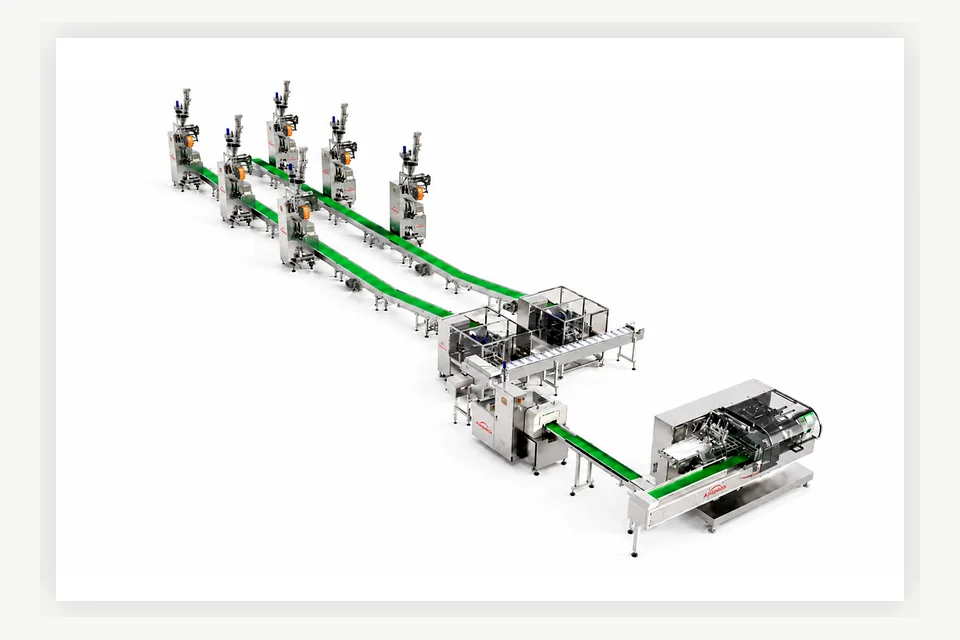
Move into complete-line planning when qualified primary-pack output, inspection, transfer, counting, secondary packaging or factory interfaces affect one another. Primary pack conditions remain the starting point.
Material, dose, film, pack geometry and seal conditions need a written review basis before downstream scope is frozen.
The rate discussion begins with stable qualified-pack output under the stated product and pack conditions.
Define whether the project ends at collection, inspection, counted groups, cartons, cases or an agreed third-party interface.
Each stage records a requirement and responsibility boundary. Modules without public proof remain project requirements until the approved written scope confirms responsibility.
Material preparation, supply stability and metering remain inputs to the primary-pack scope.
Form, fill, seal, cut and controls establish the qualified-pack output boundary.
Pack orientation, accumulation and transfer logic are defined from the real discharge pattern.
Required checks, decision rules, reject confirmation and rejected-pack handling are project inputs.
Count, collate, carton or case requirements are added only where the approved written scope includes them.
Space, access, services, interfaces and ownership are fixed around the buyer's factory conditions.
Final line performance depends on the slowest confirmed stage, material and pack behavior, buffer logic, rejection route and named upstream or downstream responsibilities.
Review all columns for the input, consequence and responsibility boundary.
| Decision point | Input to confirm | Line consequence | Responsibility boundary |
|---|---|---|---|
| Primary input | Material, dose, film, pack geometry and operating condition | Defines the valid input basis | Buyer confirms inputs; AIX reviews the agreed machine scope |
| Qualified pack output | Written pack and acceptance conditions | Defines what may enter downstream handling | Acceptance method is agreed by responsible project parties |
| Line rate basis | Stable output by stage under stated conditions | The slowest confirmed stage controls the line basis | No isolated headline rate sets the complete-line result |
| Buffer and recovery | Stop, restart, accumulation and starvation conditions | Defines buffer position and recovery logic | AIX, third party and buyer interfaces are named in scope |
| Inspection and rejection | Inspection trigger, decision rule and rejected-pack route | Defines quality gate and reject handling | Buyer confirms criteria; supplier scope records implementation |
| Upstream and downstream interface | Signals, physical transfer, utilities and ownership | Defines boundary tests and open assumptions | Each interface receives one named responsible party |
A layout is useful only when product flow, people, maintenance, cleaning, utilities, logistics and third-party boundaries fit the buyer's facility.
Footprint, ceiling, platforms, columns and floor loading.
Material entry, pack direction, carton flow and logistics route.
Electrical, air, extraction, network and other project services.
Operators, maintenance, cleaning, change parts and safe intervention.
Equipment owner, signals, transfers, acceptance and support boundary.
Installation preparation, local work, permits and factory responsibilities.
The project record must distinguish who supplies each module, who integrates each interface, what the buyer confirms and which documents support acceptance.
Equipment and functions expressly listed in the approved commercial and technical scope.
Named interfaces, controls and tests accepted as AIX integration responsibility.
Vendor, data, physical interface, signals, acceptance and support ownership.
Product, film, pack, site, utilities, criteria, access and applicable requirements.
Agreed drawings, lists, protocols, manuals, training and support records.
The images show possible line stages, not default inclusions. The buyer inputs below are needed before equipment, interfaces and evidence responsibilities can be frozen.
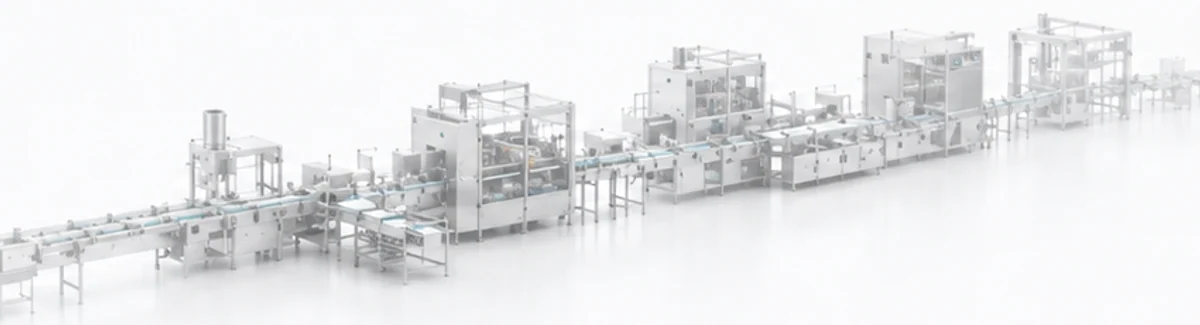
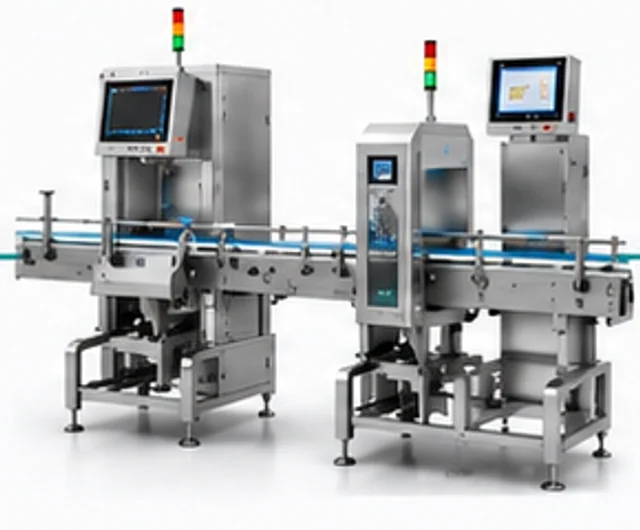
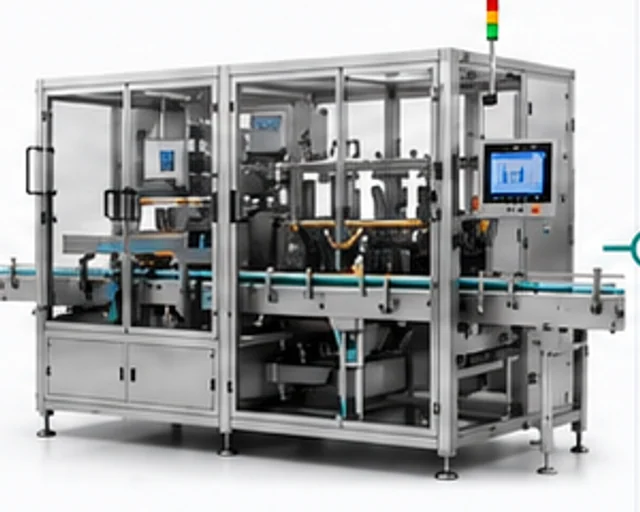
Bring the primary-pack basis, downstream target, factory conditions and responsibility questions to one line-scope review.
No. The approved written scope identifies AIX supply, AIX integration, third-party modules and buyer responsibilities.
The stated material and pack conditions, qualified output from each confirmed stage, interface logic and the slowest accepted process step control the project basis.