
Powder
Flowability, bulk density, dust and bridging shape the feeding and auger review.
Compare multi-lane suppliers using the same material, pack, dosing, line and evidence conditions, not model names, headline speed or an incomplete equipment list.
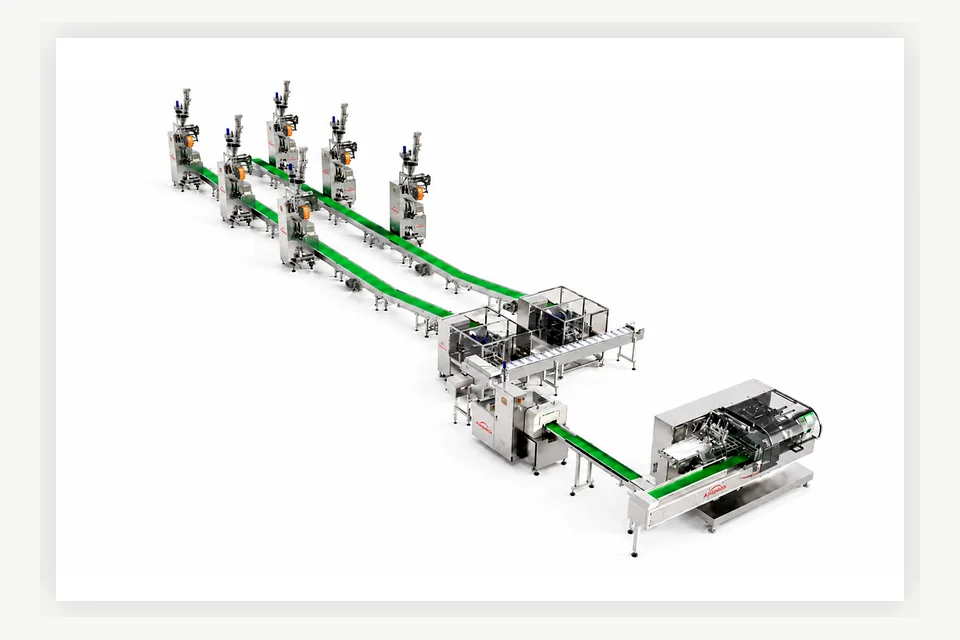
Powder flow, granule fragility, liquid viscosity and paste residue can change feeding, dosing, cleaning and seal protection more than the headline machine category.
Flowability, bulk density, dust and bridging shape the feeding and auger review.
Particle size, fines, fragility and segregation shape the transfer and metering route.
Viscosity, foam, drip and temperature shape the pump, nozzle and seal-zone review.
Stringing, residue, particles and cut-off behavior shape the valve and cleaning route.
Stick and sachet formats change lane pitch, forming parts, seal layout, cutting and downstream presentation. Film and sample-pack inputs should be compared on the same basis.
 Engineering Configuration Context
 Engineering Configuration Context
A useful proposal connects output and lane ideas to material behavior, fill, pack geometry, film control, cleaning and downstream capacity.
| Decision area | Comparable buyer input | Supplier response to compare |
|---|---|---|
| Fill and material | Nominal dose, material behavior and observation method | Dosing principle and open evidence |
| Pack geometry | Width, length, seal, opening and film repeat | Forming route and practical lane pitch |
| Conditional output | Desired rate or daily target under stated project conditions | Lane and control review after stable filling and sealing |
| Operator and cleaning | Access, changeover, residue and product-contact expectations | Serviceability and project document scope |
| Downstream capacity | Inspection, counting, transfer, carton and factory handoff | Machine-only or complete-line boundary |
A machine-only quote and a complete-line proposal are not comparable unless feeding, coding, inspection, transfer, counting, secondary packaging, layout and utilities are explicit.
Dosing, forming, filling, sealing, cutting, controls and the agreed discharge point.
Review machine platform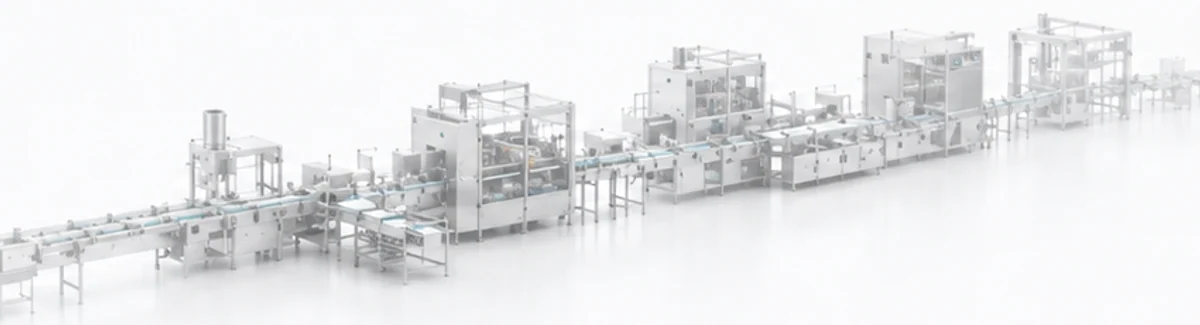 Engineering Configuration Context
Qualified pack output, inspection, arranging, counting, cartoning, case scope and layout responsibility.
Review complete-line boundaryCompare what each supplier will test, document and support under stated conditions. Keep product-, process- and site-specific conclusions with the responsible project parties.
| Evidence area | When it matters | Boundary to define |
|---|---|---|
| Test need | When material, film or seal behavior can change the route | Sample identity, conditions, method and open items |
| FAT scope | When project functions and acceptance points require witnessed review | Agreed protocol, setup basis, observations and records |
| Supplier documents | When drawings, contact-part records, manuals or qualification support are required | Document list and responsibility frozen in the contract |
| Acceptance | When output, filling, pack quality or line handoff requires a stated decision rule | Condition-specific criteria and sign-off responsibility |
Use one checklist across suppliers so exclusions, assumptions and remaining risks stay visible before a commercial decision.
Does the proposal state the material, sample, fill, pack, film and operating basis behind each key statement?
Does it separate machine, dosing, inspection, downstream, utilities and buyer responsibilities?
Does it identify what will be observed, measured, documented and kept open before acceptance?
Does it explain what happens when the material, pack, output target or factory boundary changes?
Does it define training, documents, spares, service and qualification-support deliverables without generic promises?
Does the quotation connect price and schedule to the same technical scope used for engineering review?