
Define intended use and target market
Confirm product, shelf-life objective, barrier need, storage, target-market and applicable product-contact or migration requirements.
Define the finished stick pack or sachet first, then review film, sealing, opening, filling and downstream conditions. A pack image alone cannot establish machine compatibility or production performance.
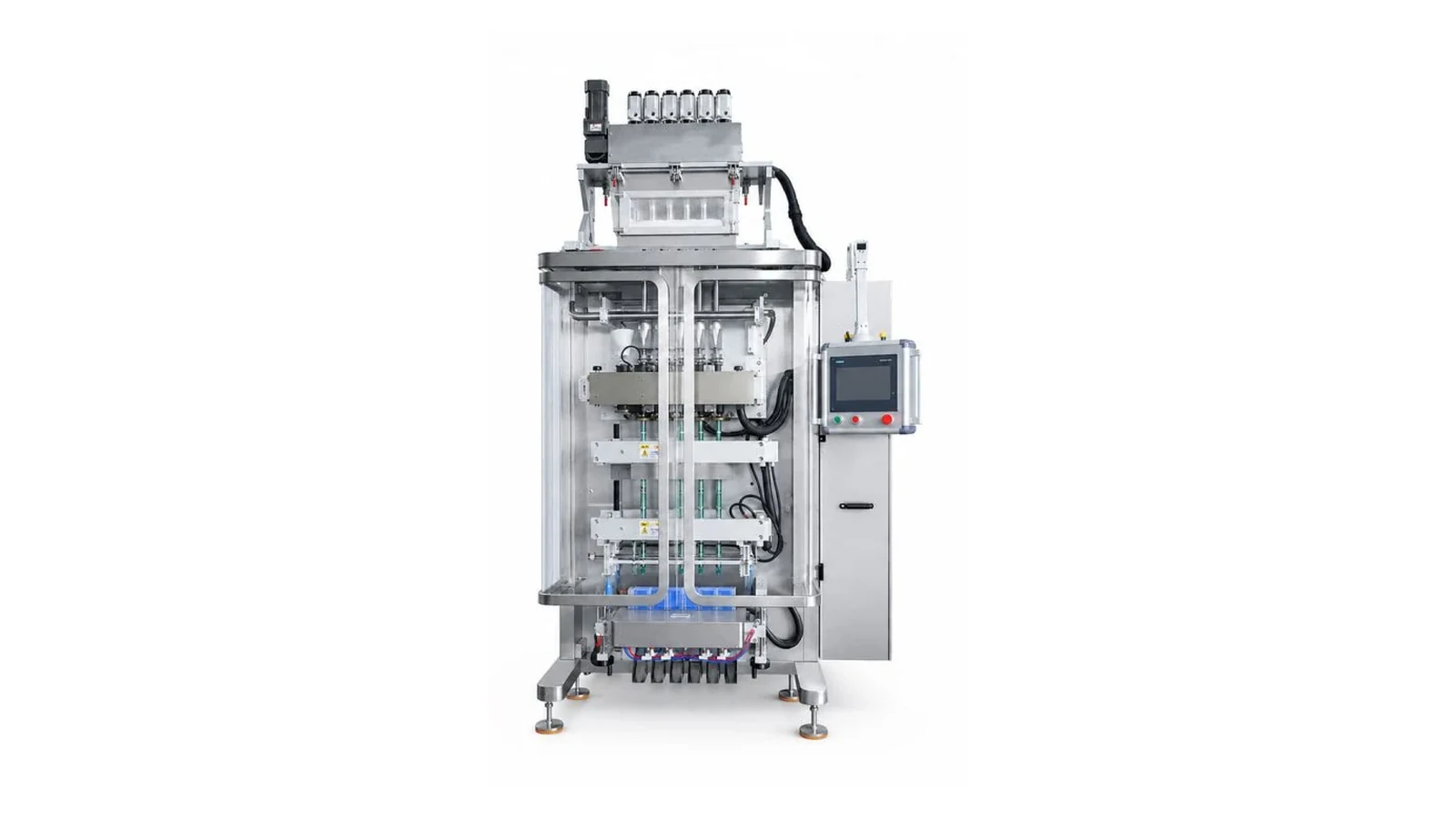
Use target, geometry, seal structure, residue sensitivity and downstream handling to choose the route before forming hardware or lane pitch is discussed.
Review all columns before selecting the finished-pack route.
| Decision | Stick Pack | 3-Side Seal Sachet | 4-Side Seal Sachet |
|---|---|---|---|
| Use target | Narrow single-dose presentation | Three sealed edges with one formed edge | Four sealed edges and wider presentation area |
| Geometry and display | Slim profile with limited print width | Flat pouch with asymmetric edge structure | Flat pouch with balanced perimeter seals |
| Seal structure | Longitudinal seal plus end seals | One formed side plus three sealed sides | Four perimeter seals |
| Residue sensitivity | Narrow drop and seal path require product-specific review | Fill path and open edge need review | Seal perimeter and product spread need review |
| Downstream handling | Lane discharge, count and orientation | Pouch transfer and orientation | Wider pouch transfer, count and presentation |
Dimensions, seal edges, headspace, opening, cut and print repeat need an approved reference before the forming route can be reviewed.


State dimensions and tolerances from a drawing or approved sample basis.
Mark longitudinal or perimeter seals, usable fill area and required headspace.
Define tear notch, laser or mechanical cut request, corner and consumer opening target.
Provide artwork repeat, eye-mark data, print orientation and acceptable position basis.
Use a representative sample, dimensioned drawing and intended product condition together.
Film structure and suitability are not inferred from a pouch image. Valid supplier and buyer information establishes the material basis used for equipment review.
Confirm product, shelf-life objective, barrier need, storage, target-market and applicable product-contact or migration requirements.
Provide structure, thickness, sealing window, barrier, migration and product-contact records applicable to the proposed laminate.
Review the provided film basis against forming, tracking, filling, sealing, cutting and finished-pack handling questions.
Product behavior changes filling, residue control and seal protection. Use the dedicated dosing and material pages for the full engineering route.
Flow, dust and seal-area carryover shape the fill and pack review.
Review material routeParticle size, fragility and drop behavior shape the route.
Review material routeViscosity, foam and drip shape nozzle, cut-off and seal protection.
Review material routeStringing, particles and residue shape valve, width and cleaning questions.
Review material routeEach visible feature becomes an engineering input. Testing can observe agreed conditions, but it does not replace shelf-life, migration or regulatory validation by the responsible parties.
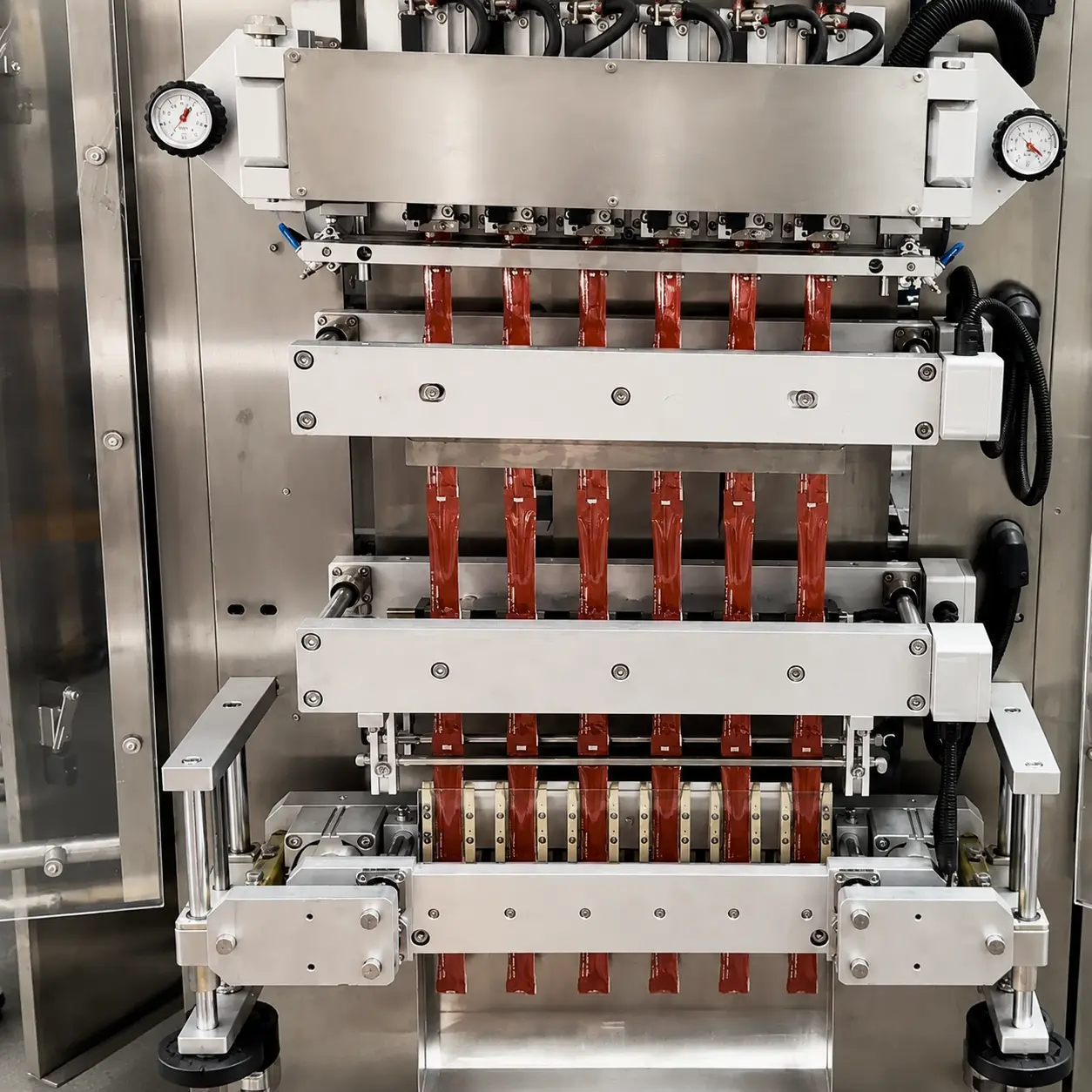


Roll width, tension, tracking and forming geometry follow the approved pack basis.
Seal window, product carryover, pressure, dwell and contact conditions require project evidence.
Cut position, notch, corner and opening features must be reviewed with the finished pack.
Print repeat, eye marks, graphics position and visual acceptance need a written basis.
Agreed testing may observe film travel, filling, sealing and appearance under stated conditions.
Finished-pack stability, orientation, count, inspection and secondary packaging can change the line boundary after the format is selected.
Use the finished dimensions, film basis, fill target and downstream boundary.
Prepare format RFQUse representative product and film to review agreed forming, filling, sealing and appearance conditions.
Review sample routeConnect qualified packs to inspection, transfer, counting and the agreed factory handoff.
Review complete linePrepare dimensions, seals, opening, print repeat, film evidence, product condition, dose and downstream target before the platform is selected.
No. Dimensions, film structure, seal window, product behavior, opening, registration and downstream conditions still need review.
It can record agreed observations for film travel, filling, sealing and appearance under stated conditions; it does not replace shelf-life, migration or regulatory validation.