
Product and sample
State material form, observed behavior, sample status and production condition.
Define the multi-lane sachet platform from the real product, target fill, finished pack, film, conditional output and downstream boundary. The visible platform does not establish filling hardware, lane arrangement or performance.
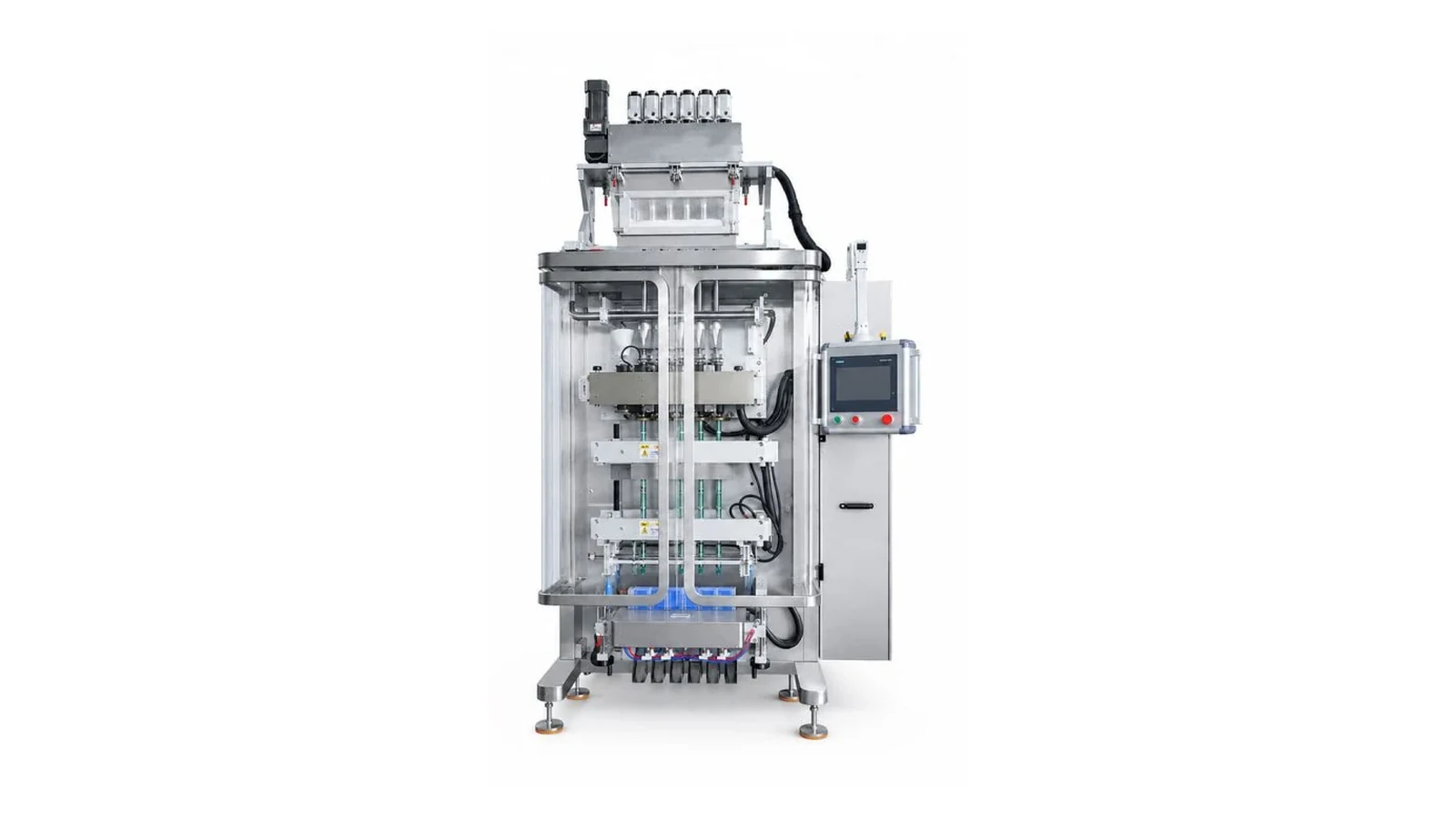
Use this route after the buyer can describe the product, target fill, finished sachet, film basis, conditional output and downstream need. Keep format comparison on the Pack Formats page.
State material form, observed behavior, sample status and production condition.
State the intended fill and acceptable project review basis without assuming a standard range.
Provide dimensions, drawing, headspace, opening and three-side or four-side seal target.
Provide laminate structure, roll data, print repeat, eye mark and seal-window evidence.
State the target rate, shift basis and the conditions under which it must be assessed.
Define collection, inspection, counting, grouping, secondary packaging or factory handoff.
State product-contact, access, changeover and residue-control expectations.
State market, quality, acceptance and document requirements that apply to the project.
The platform path links film handling, forming, material-matched metering, fill timing, sealing, registration, cutting and the qualified-pack handoff.
Review roll data, tension, tracking and whether slitting or forming requirements affect the platform.
Translate the approved geometry and seal format into a project-specific forming route.
Connect the material-matched feeding and dosing decision to the sachet platform.
Review drop, flow, foam or cut-off behavior against the open pack and seal-zone timing.
Review film window, registration, seal perimeter, cut position and opening request together.
Define the accepted pack and the collection, inspection or downstream boundary that follows.
This is a routing summary only. The Dosing Systems page owns the complete material-to-metering comparison.
Flow, dust, bulk density and seal-area carryover guide the feeding and metering review.
Review powder routeParticle size, breakage, segregation and drop behavior guide the route.
Review granule routeViscosity, foam, dripping, particles and cut-off guide the supply and filling review.
Review liquid routeStringing, residue, particles, temperature and cleaning guide the supply and cut-off review.
Review paste routeVisible pack geometry and seal edges help frame the review; they do not prove compatibility, sealing performance, shelf life or an accepted pack result.


Review roll width, tension, tracking, forming and any slitting requirement from current film data.
Review print repeat, eye mark, artwork orientation and accepted position basis.
Review product carryover, seal window, perimeter, headspace and cleaning access.
Review cut position, tear or opening request and finished-pack handling from a drawing or sample.
These are the five inputs used to structure the engineering review and Product data. They are not published catalogue specifications.
| Project decision | Input and written boundary |
|---|---|
| Material and behavior input | Provide product state, representative sample status, flow, dust, foam, stringing, particles, residue and operating temperature where relevant. |
| Pack format and film input | Provide sachet dimensions, three-side or four-side seal, film structure, print repeat, registration and seal-window evidence. |
| Feeding and dosing review | Select feeding and metering only after material behavior, target fill and cleaning requirements are reviewed. |
| Target output and downstream input | State the conditional output target, shift basis and required inspection, collection, counting or secondary-packaging handoff. |
| Final configuration and acceptance | Confirm lane arrangement, output basis, machine scope and acceptance method in approved written project documents. |
The same five conditional inputs are used in the Product structured data for this page. They are not catalogue specifications.
A complete quotation requires a written basis for the material route, pack route, conditional output, machine scope, downstream handoff and acceptance method.
The approved images support discussion of a sachet platform, pack geometry and seal-edge questions only.
Filling hardware, lane arrangement, output basis, accuracy, film fit, seal result, cleaning scope and downstream responsibility remain project-specific.
Use the RFQ when the main inputs are known. Use Sample Testing when material or seal-zone behavior may change the route.
Provide the material and sample status, target fill, finished sachet drawing, seal format, film data, output target, downstream boundary and any cleaning or documentation requirements.
No. The image provides engineering configuration context only; metering, lane arrangement, output basis and acceptance conditions require project review and written confirmation.
Use sample testing when flow, foam, stringing, particles, residue or seal-zone carryover may change feeding, dosing, cut-off or cleaning decisions.