
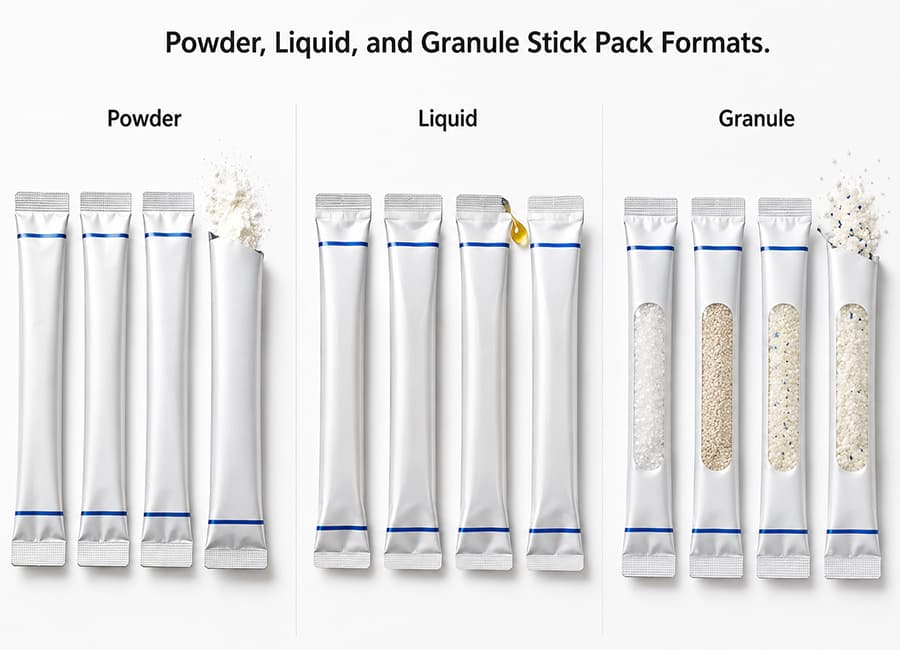
Use format, seal and opening requirements to frame the route review.
Define how the pack is filled, opened and used
Start with the target portion, consumer handling, opening action, dispensing direction and any requirement for grouping or secondary packaging. Translate those use conditions into width, length, seal arrangement, tear feature, headspace and artwork zones. This prevents an attractive reference pack from being copied without understanding the physical behavior the final format must deliver.
The pack drawing is an engineering input only when its dimensions, materials and use conditions are explicit.
Connect film structure to process questions
Record the intended structure, thickness range, surface treatment, friction, print registration and sealant layer where known. Identify which items come from the material supplier and which still need trials. Use supplier data and trial records together to define how the web should track, form, seal and cut under the intended conditions.
Approve a controlled physical reference before tooling
Use a dimensioned drawing, artwork file, film sample and finished-pack target with matching revision identity. Confirm seal appearance, tear position, code area, cut profile and downstream presentation through an agreed check. When one element changes, record whether tooling, forming parts, sealing geometry or machine timing must be reviewed again before the pack definition is released.