
Sachet Machines
Multi-Lane Sachet Machine
Define sachet format, sealing, dosing and line-interface requirements.
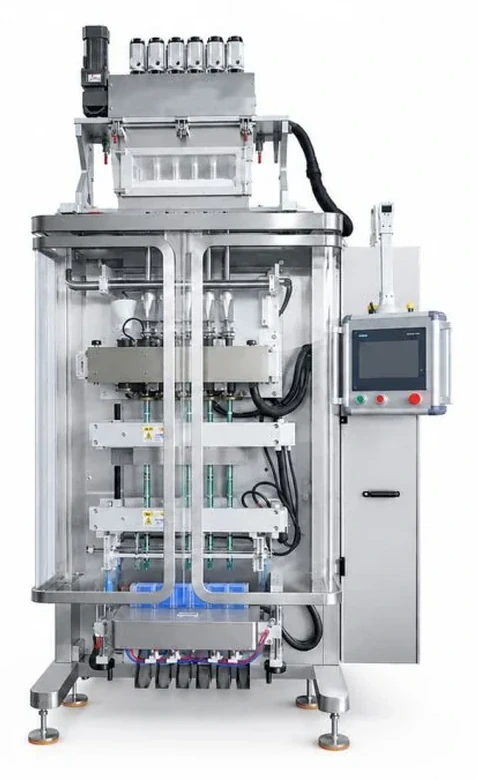
A sachet format, a product-specific filling route
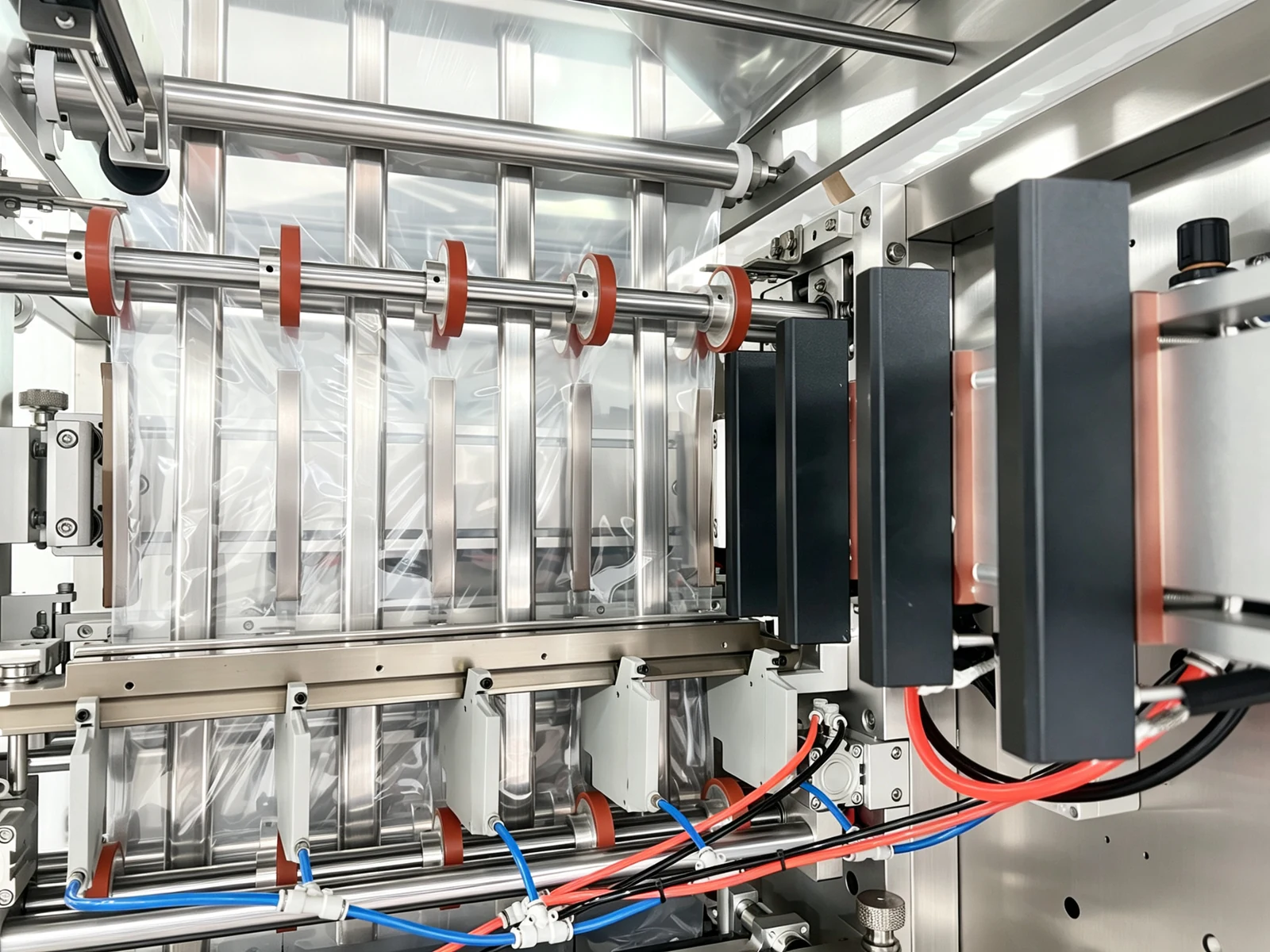
Pack format and dosing are separate choices
Pack dimensions, seal layout and opening define the sachet you want to make. The actual product determines the feeding and dosing arrangement to evaluate. Start with these two decisions together: a sachet format alone does not establish that the same filling setup suits powders, granules and liquids.
Compare dosing methods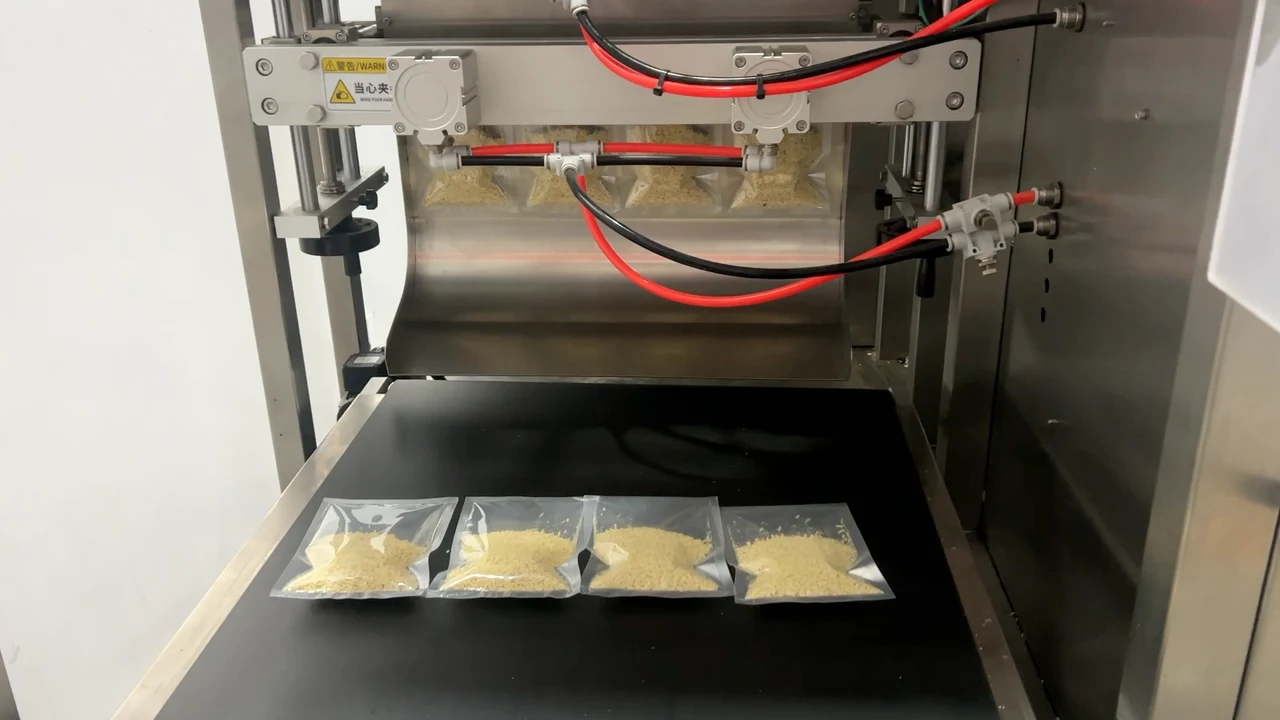 Watch sachet discharge · 10 sec
See how sachets reach the conveyor
Four sachets leave the discharge area side by side and move along a conveyor. Use this example to discuss pack orientation, spacing and the next-machine handoff. Fill quantity, seal quality, cutting and discharge still need agreed checks for your product and film.
Prepare your material and filmYOUR SACHET PROJECT
Bring the pack, product and line requirements together
For several products or pack sizes, list each combination and its required output separately. A shared configuration needs a review of those combinations, not just one successful sample. Agree the trial conditions and checks, then record which product, film and pack the result covers. Start with the details you already have.
- 01Sachet geometry
For a three-side-seal pack, mark the three seals and show how the remaining edge is formed; for a four-side-seal pack, mark all four seals. Include finished width and length, edge profile, tear/opening feature and print registration. Compare filling, sealing and opening with the intended product and film before confirming the forming and sealing configuration.
- 02Product route
Give the target amount per sachet and describe the powder, granule, liquid or object, including its flow or handling behavior. Use those inputs to assess the feeding and dosing unit.
- 03Seal window
Film structure, product contamination risk, sealing conditions and appearance criteria.
- 04Cut and discharge
Cut profile, count or grouping logic, discharge direction and pack presentation.
- 05Connected scope
For the quote, identify required inspection, coding, reject handling, cartoning or other downstream interfaces. Mark existing equipment and any equipment or connections that another supplier will provide.
Choose the next step