
Integrated Lines
Integrated Stick Pack Line
Plan a connected line around your product, stick-pack format and final pack. Define transfer, counting and the inspection or secondary packing your project needs after sealing.
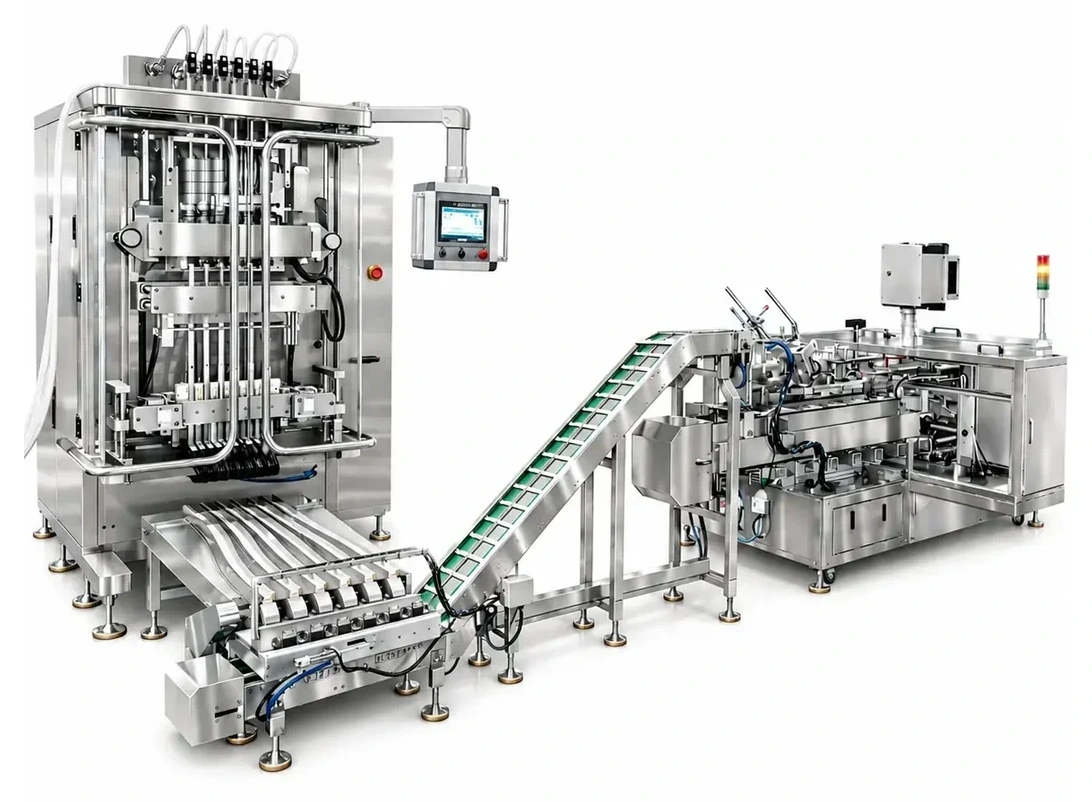
- Primary packaging
- Pack transfer
- Downstream packing
From stick pack to final pack
Plan the whole packaging sequence
A connected line needs more than a primary machine. Decide how stick packs should reach the next station, which equipment is already on site and where the new supply should start and finish.
- Primary packing: product, fill weight, film and stick-pack format
- Transfer: pack direction, spacing, grouping and accumulation
- Final packing: collection, outer bags or cartons, with the count you need
Start with these three items
- 01Your product, a stick-pack example and required output.
- 02The final bag or carton, with the number of sticks it should contain.
- 03An available floor plan and details of equipment already on site.
See how stick packs move downstream
Follow finished packs from the transfer mechanism into the downstream pockets on a liquid stick-pack line. When planning a line, review pack orientation, grouping and the receiving machine together.
Open videoView equipment footage
Your line requirements
Agree what each part of the line needs to do
Work through these requirements together so the proposed layout, equipment connections and quotation describe the same line.
- 01Supplying product to the machine
Define product supply, refill and any holding or buffer arrangement. Identify what the existing process provides and what the new equipment must include.
- 02Making and sealing the stick packs
Review dosing, forming, film, seals and coding together with the product, fill weight and intended pack dimensions.
- 03Checking packs and handling rejects
Specify what needs checking, where rejected packs should go and how removal is confirmed. Agree what the line should do when a check fails.
- 04Transferring into the final pack
Define pack direction, spacing, group size, accumulation and the receiving requirements of the bagger, cartoner or other downstream equipment.
- 05Starting, stopping and checking the line
Agree ready, run, stop and fault signals, recipe settings and required production records. Define the factory acceptance test (FAT) checks for the connected equipment.
Connecting machines into a working line
- Can the line connect to equipment already in our factory?
- Start with the existing machine models, drawings and operating information. Check discharge height and direction, pack spacing, receiving requirements and control signals together. The connection needs a layout and interface review before compatibility can be confirmed.
- How should we specify the required line output?
- State the required sticks per minute and final bags or cartons per minute, including the number of sticks in each outer pack. Agree how output will be checked with the intended product, film, inspection and stop-and-restart conditions; a primary machine rate alone does not define the complete line output.
Choose the next step