
Machine discovery
Packaging Machines & Integrated Lines
Move from pack format and material route to the machine family and line boundary that should be reviewed.
Move from pack format and material route to the machine family and line boundary that should be reviewed.
Project starting pointConfirm material, pack and line scope firstMachine routes
By product type
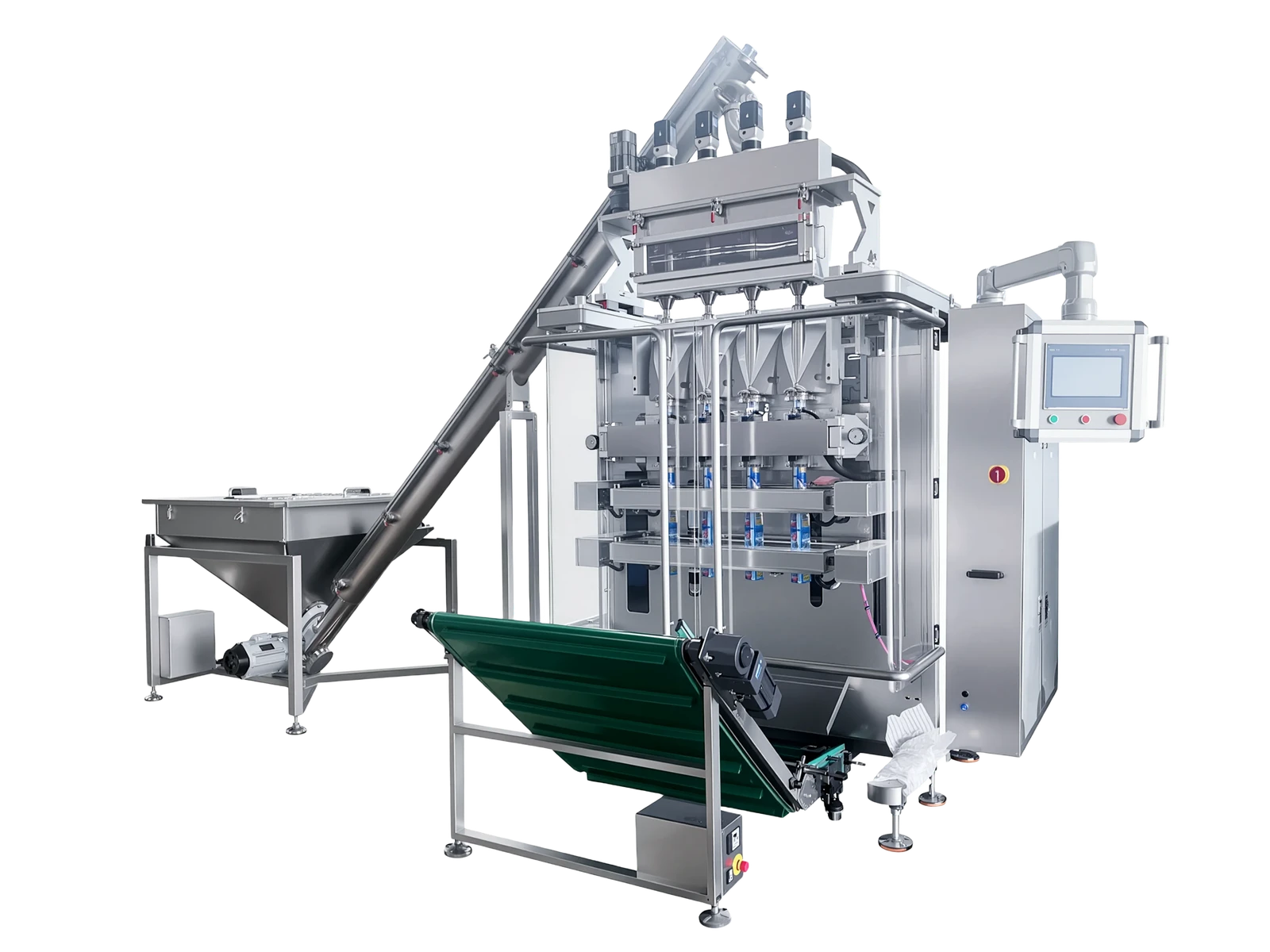 01
Stick Pack Machines
Compare multi-lane stick pack machines for powders, granules and liquids. Start with your product, fill quantity and pack requirements.
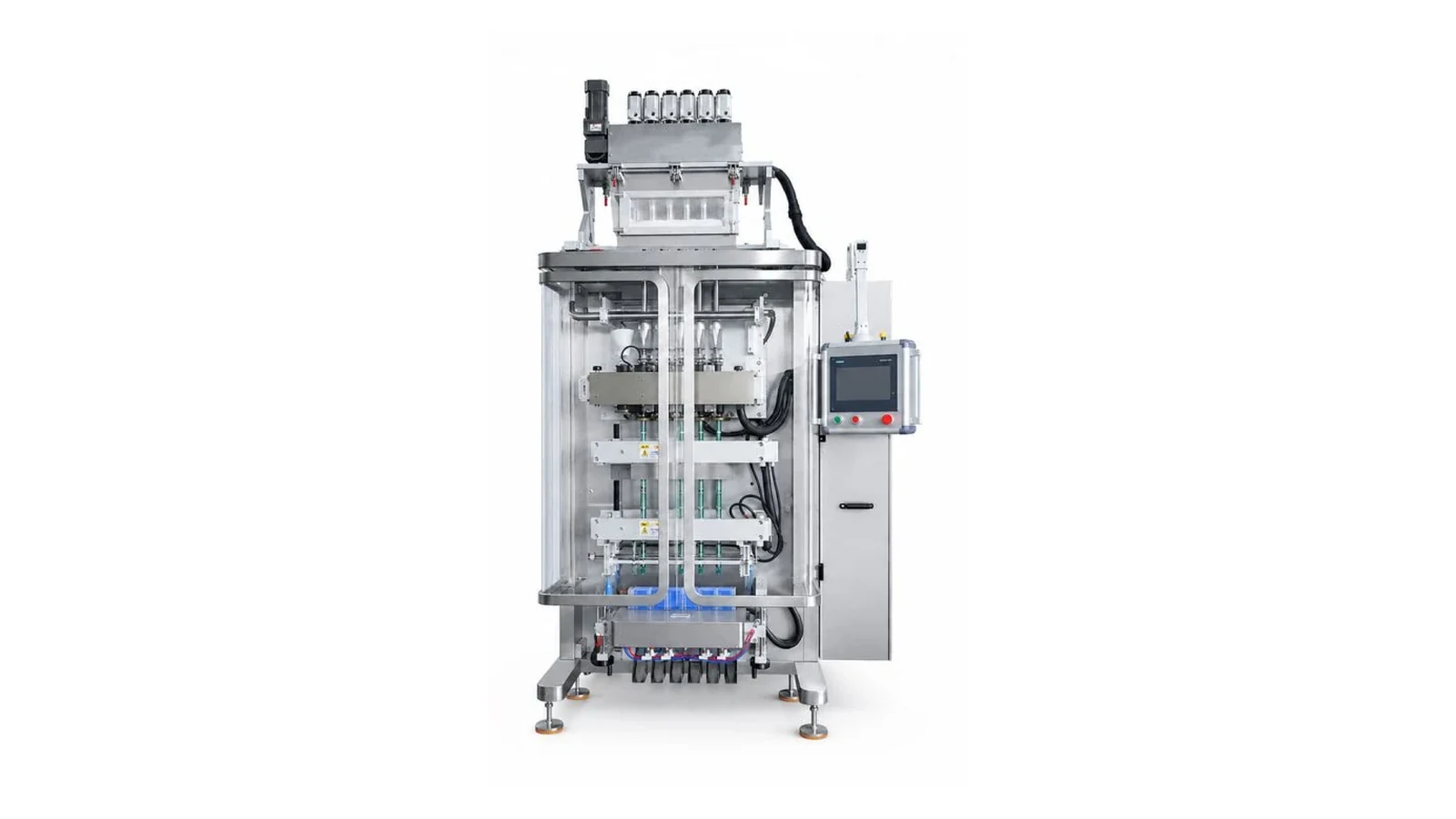 02
Sachet Machines
Four-side and three-side seal sachet routes framed around product and opening requirements.
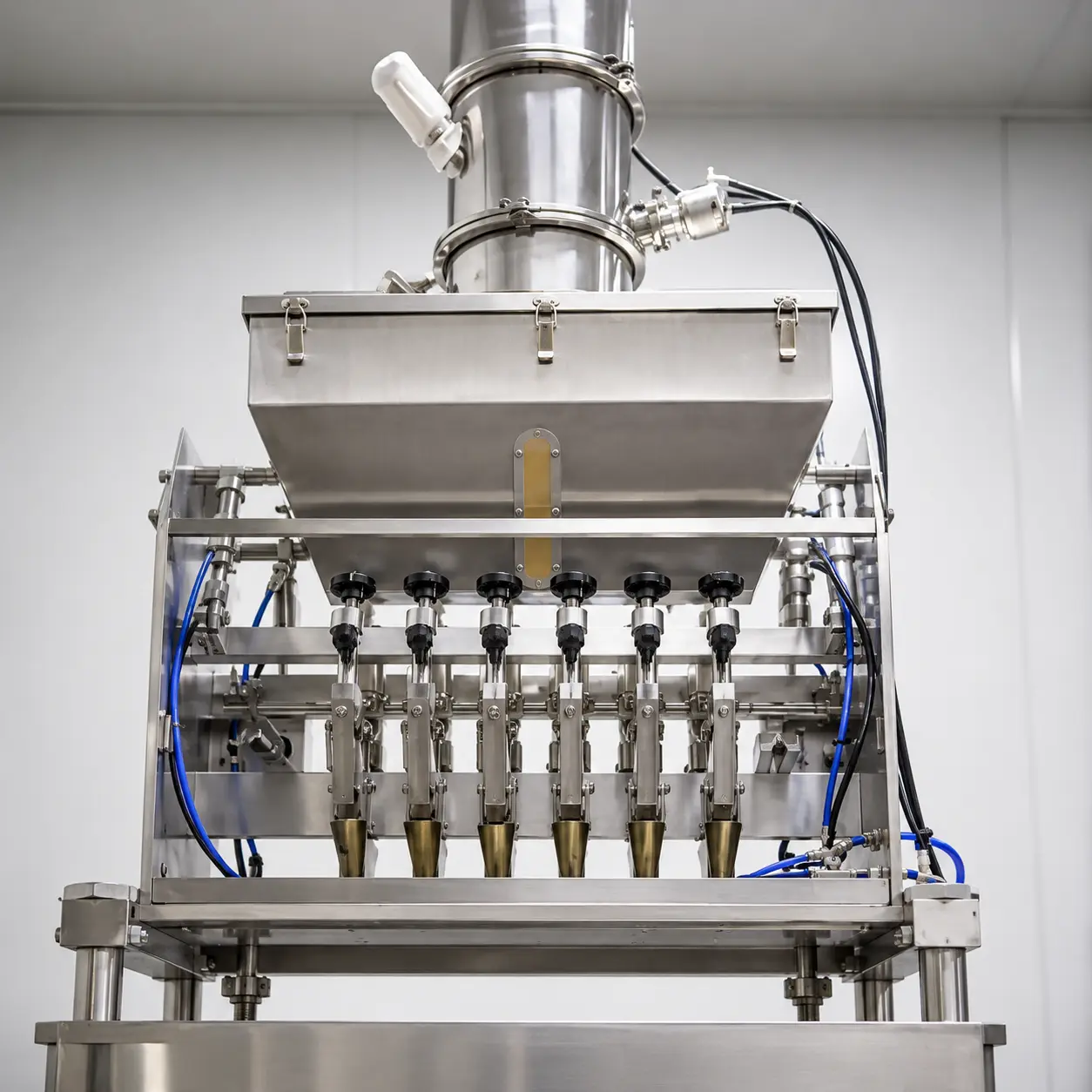 03
Dosing Systems
Compare auger filling for powders, volumetric dosing for granules and pump dosing for liquids. Product behavior, target dose and pack format guide the selection.
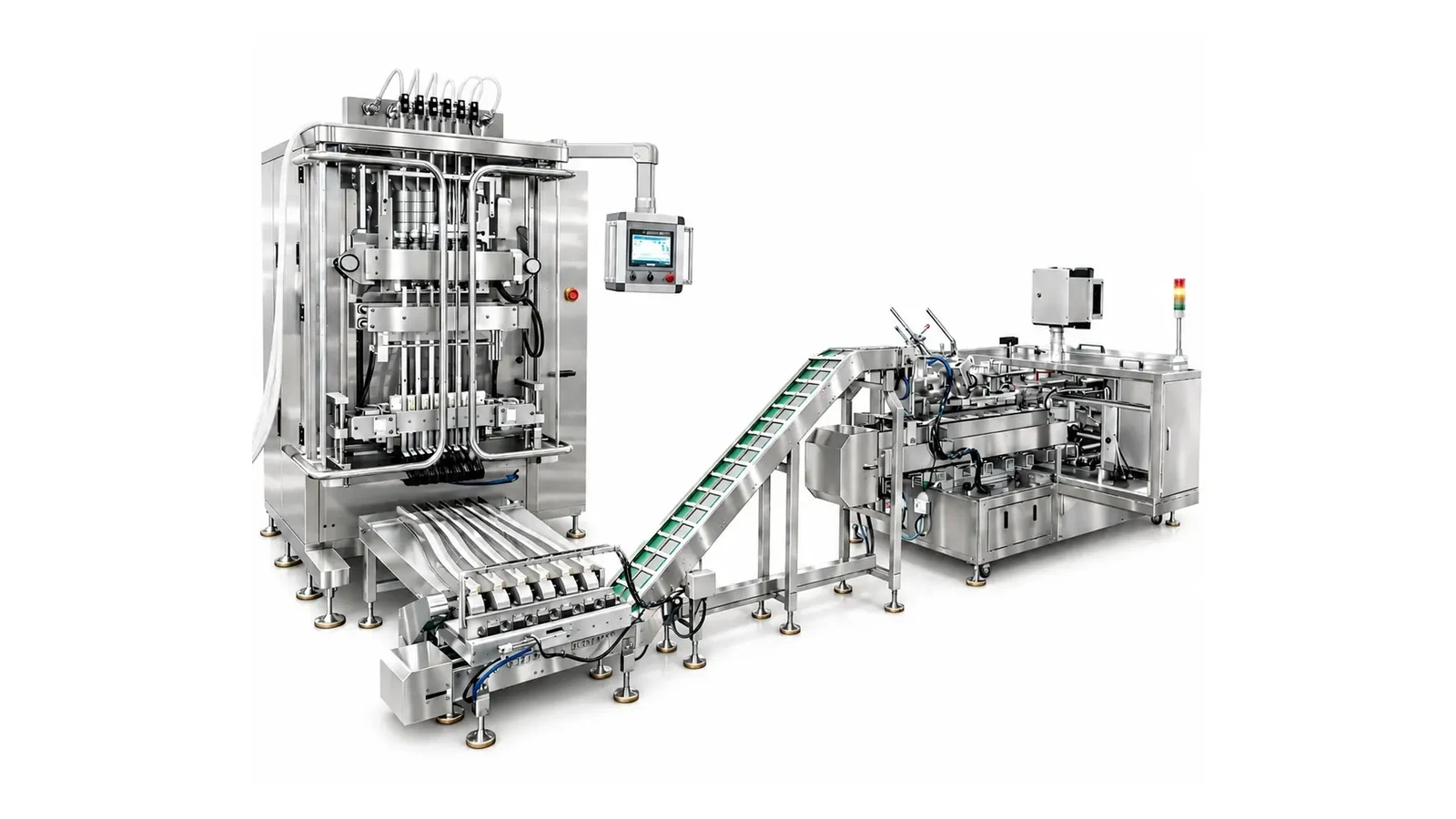 04
Integrated Lines
Define the primary machine, inspection, transfer and downstream handoff as one scope.
Single-lane or multi-lane: compare usable output
Start with the good packs required per shift and the available production time. Compare candidates at the same counting point, using the intended product, pack and quality checks.
- 01
Calculate theoretical output, then measure good output
For a format producing one pack per active lane per cycle, theoretical packs/min = active lanes × cycles/min. Confirm what one cycle produces; do not multiply an already quoted total packs/min by the lane count again.
Hypothetical example, not AIX measured performance: 4 active lanes × 40 cycles/min × 1 pack/lane/cycle = 160 packs/min. If 1,200 packs meet the agreed checks during a 10-minute observation including stops, measured good output is 1,200 ÷ 10 = 120 packs/min. These assumed figures do not establish a standard efficiency.
- 02
Choose lanes around the production requirement
A single-lane candidate can be sufficient when its verified good output meets demand. For short runs or frequent product changes, compare cleaning and changeover time as well as running speed. Consider multiple lanes when the required output calls for simultaneous production and the product, dose and pack format can run consistently across those lanes.
More lanes do not remove filling, sealing or downstream limits. Compare output for the proposed configuration, and measure completed outer packs separately if cartoning is included.
See how to record trial output. Define the integrated-line scope.
Directory decisions
Use these questions to narrow the next route
Each entry represents a different product, pack or interface decision. Start with the closest questions, then open the detail route to prepare the sample and project records it needs.
- 01
Stick Pack Machines
Material conditionRepresentative sample condition, moisture context, bulk density and observable flow behavior.
Dosing basisTarget fill, acceptance method, sampling plan and the variation the project must evaluate.
Seal protectionDust behavior around the seal area and the cleaning access needed between runs.
- 02
Sachet Machines
Sachet geometryThree- or four-side seal, width, length, edge profile, tear feature and print registration.
Product routePowder, granule, liquid or object behavior and the dosing unit that must be evaluated.
Seal windowFilm structure, product contamination risk, sealing conditions and appearance criteria.
- 03
Dosing Systems
The actual productIdentify the product and batch, with storage, temperature and safe-handling instructions. Explain any difference between the sample and normal production.
Amount in each packGive the target weight or volume, allowed variation and how you intend to check it. Explain whether there are several pack sizes.
How the product behavesDescribe or film flow, clumping, dust, fragile particles, settling, foam or stringing. Include the conditions in which the problem appears.
- 04
Integrated Lines
Supplying product to the machineDefine product supply, refill and any holding or buffer arrangement. Identify what the existing process provides and what the new equipment must include.
Making and sealing the stick packsReview dosing, forming, film, seals and coding together with the product, fill weight and intended pack dimensions.
Checking packs and handling rejectsSpecify what needs checking, where rejected packs should go and how removal is confirmed. Agree what the line should do when a check fails.
Choose the next step