Compare auger filling for powders, volumetric dosing for granules and pump dosing for liquids. Product behavior, target dose and pack format guide the selection.
Compare auger filling for powders, volumetric dosing for granules and pump dosing for liquids. Product behavior, target dose and pack format guide the selection.
Test the actual product and film together before agreeing the configuration, fill tolerance, output and cleaning requirements.
Auger vs volumetric dosing: what are you comparing?
Auger describes the feeding mechanism; volumetric and gravimetric describe the dosing principle. An auger can meter a calibrated volume or work with weighing. Ask whether a quotation uses “volumetric” to mean a measuring-cup filler or volume-based auger dosing.
Volume-based auger: a screw feeds the product using a calibrated setting. Consider it for powders, including products that do not flow freely, with suitable auger and hopper tooling. Check weight consistency when bulk density, aeration or refill conditions change.
Volumetric cup: an adjustable chamber measures a volume. Consider it for dry, free-flowing granules that fill and empty the chamber consistently. Do not assume a cohesive powder will behave the same way. A fixed volume does not guarantee a fixed weight when bulk density changes.
Gravimetric auger: a weighing signal controls the current fill. Review this option when variable product density makes volume-based dosing insufficient for the required weight tolerance. Distinguish this from a downstream checkweigher that measures completed packs and adjusts later fills; that feedback alone does not make the current fill gravimetric.
Choose by a representative trial: compare the proposed arrangement against the required fill tolerance, output and cleaning needs. The method name alone does not establish suitability or accuracy.
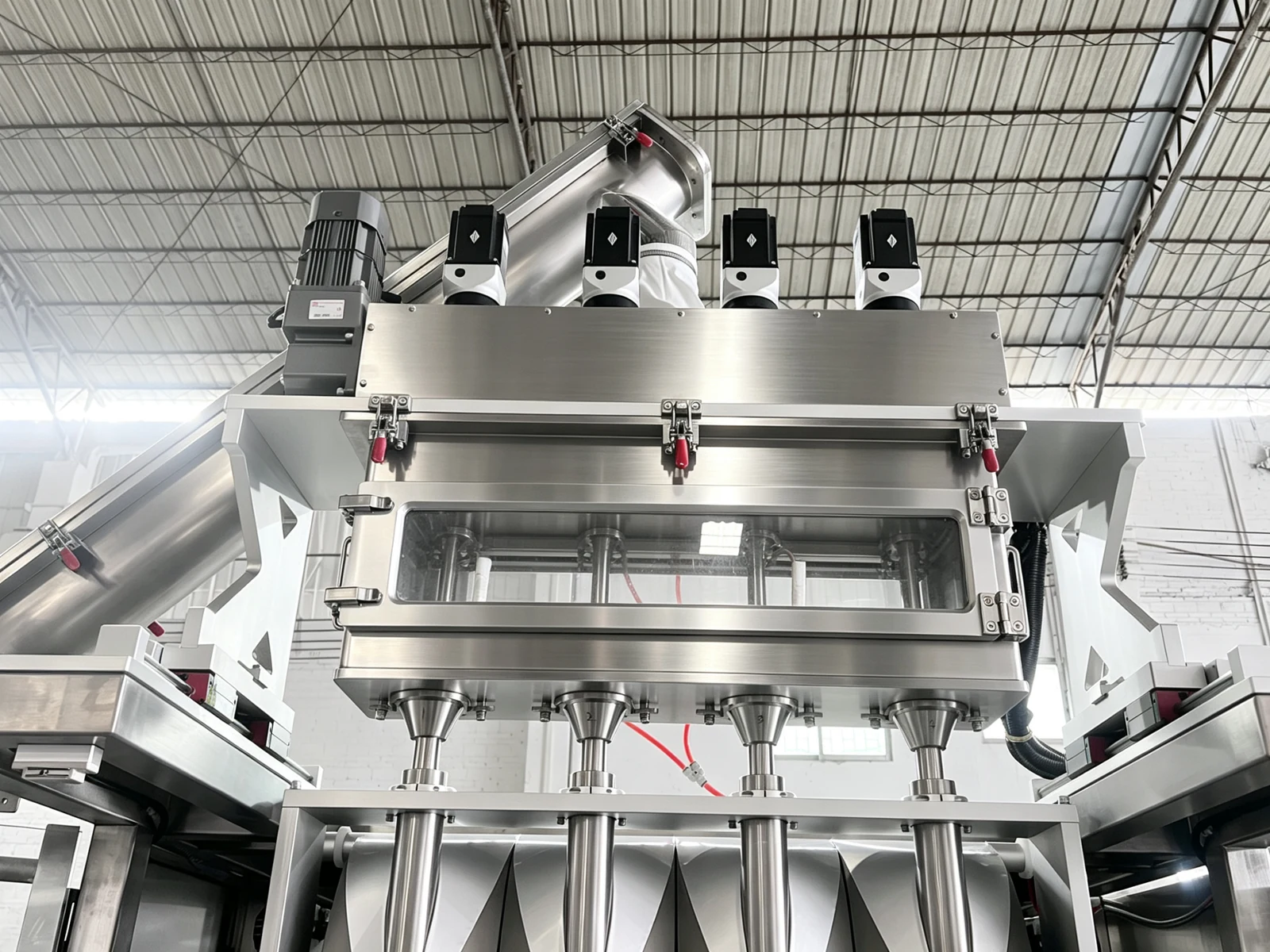
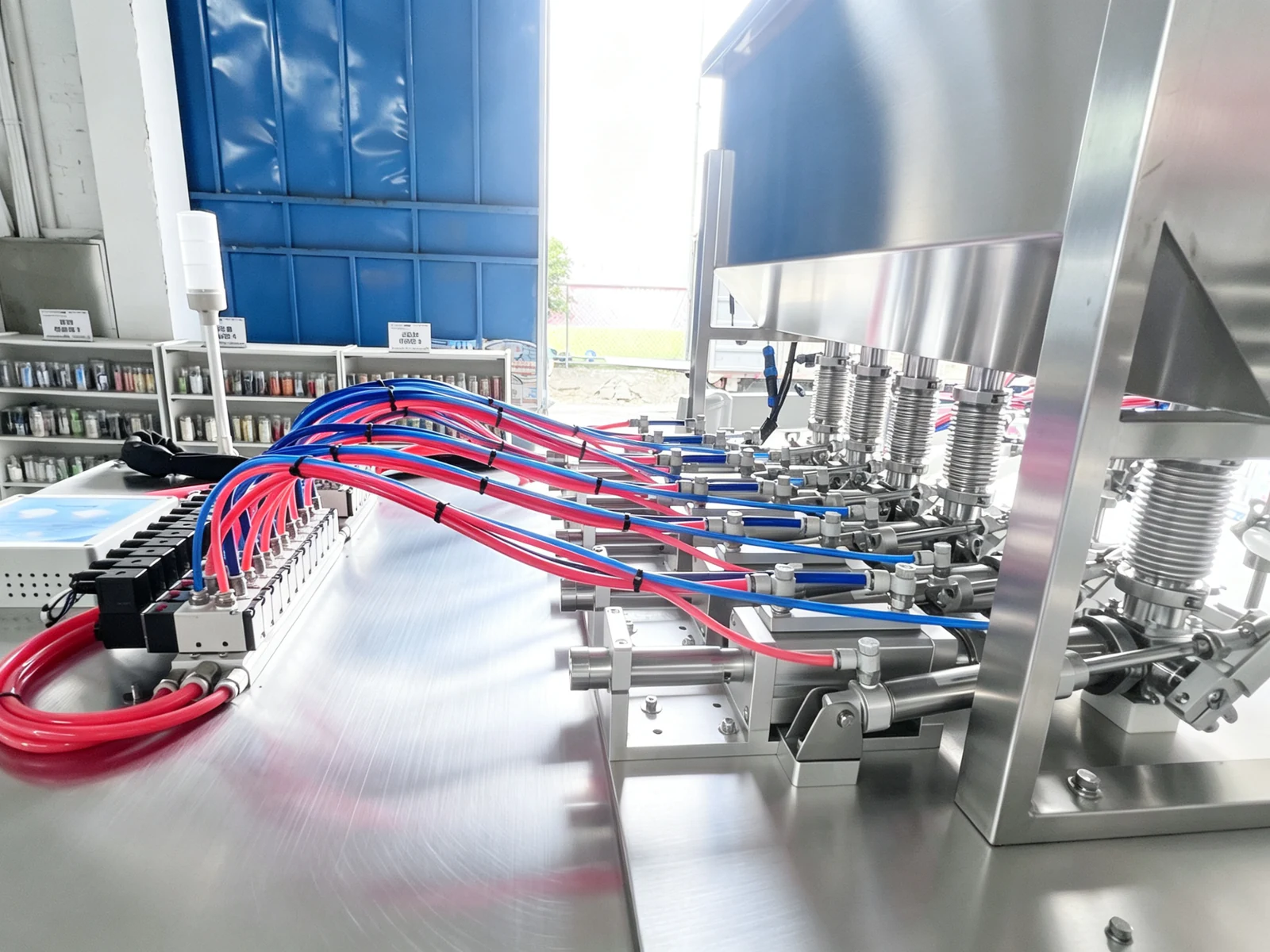
Powder feeding and dosing assemblyLiquid-machine dosing assemblies
How to choose a multi-lane feeding system
Review the supply path, refill behaviour and cleaning access for each lane. The photographs above show a powder-feed inlet and repeated assemblies; they do not establish the internal distribution path or equal dosing across lanes.
Along with the sample brief below, provide the planned lane count, supply container and refill method, available access space, and products used before and after a changeover.
Map supply to every lane. A shared hopper or distributor may supply several dosing outlets; separate lane feeds supply individual units. Distribution supplies material, while dosing sets each portion. Ask for the proposed flow drawing, refill trigger and lane-level controls. For powders, review how bridging or uneven supply to the screws will be addressed.
Check each lane through refill. Keep samples labelled by lane. Compare pack weights during steady running, before, during and after a representative refill, and after restart. Agree sampling frequency and fill limits before the trial. A pooled average can conceal a lane that is consistently over- or under-filling.
Review the next product change. Identify the product-contact parts on the proposed route, including hoppers, dosing parts and filling tubes. Ask for a demonstration of safe access, removal where required, and reassembly under the equipment procedure. Agree the cleaning method and residue checks for the intended food products; visible clamps alone do not establish cleanability.
Prepare a useful product test
Tell us how the product is stored and fed in production. Review the material, target dose and pack together to decide what the sample test needs to establish.
Representative product and storage or temperature conditions