
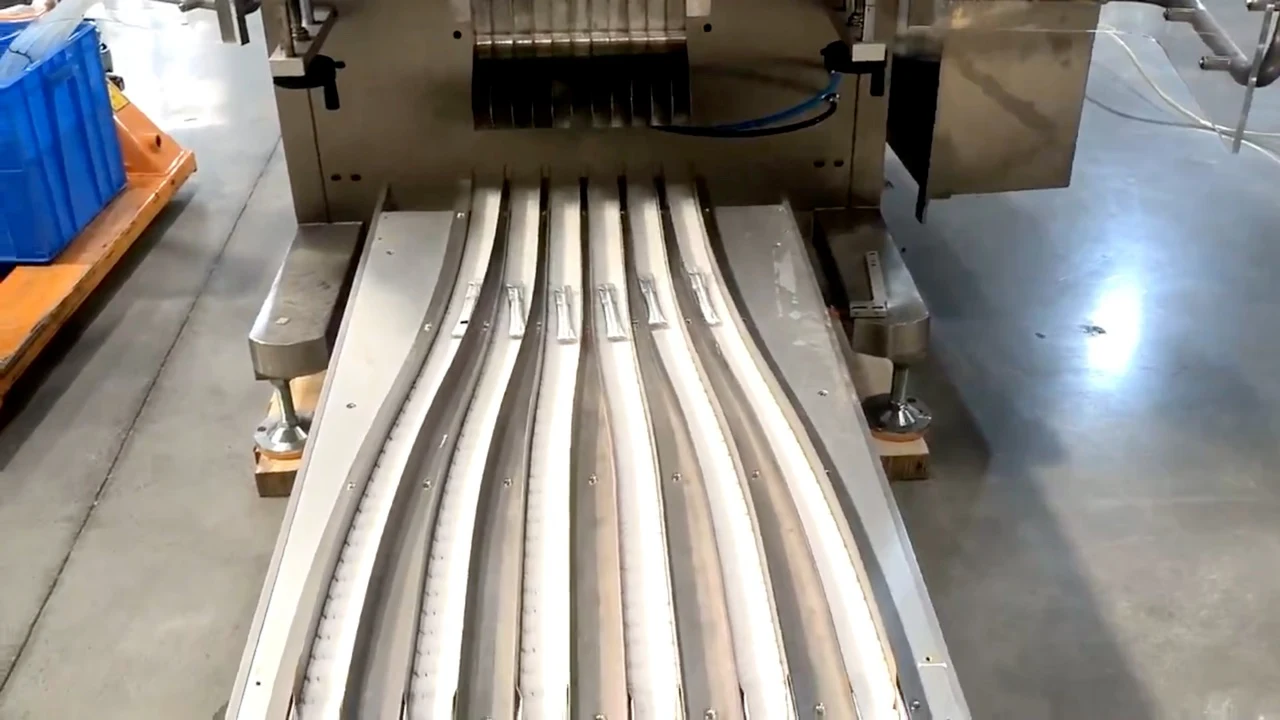
Where the primary machine ends, and why the next interface should be defined early.
Define the pack at the primary-machine exit
Begin with measurable handoff conditions: exit height, direction, pack pitch, orientation, seal temperature at discharge and the time available before the next operation. A downstream discussion is necessary whenever the finished pack must be inspected, counted, grouped, reoriented, buffered, cartoned or case packed. Defining that physical state early prevents a later machine from being treated as an isolated accessory.
A primary machine is not a complete line until the next pack state and the responsibility for creating it are defined.
Write the mechanical and control interface together
The scope should identify usable transfer space, guarding boundaries, accumulation, reject destination and recovery after a stop. It should also define ready, run, fault and stop signals, speed references and which machine owns each decision. A drawing without the control contract leaves the most important integration assumptions unresolved; a signal list without the pack geometry creates the same problem in reverse.
Test the handoff as an operating sequence
Acceptance should cover normal transfer, a controlled stop, restart with product in the interface, an inspection reject and recovery from a downstream fault. State who supplies samples, who records results and what constitutes a successful handoff. If those questions affect layout, controls, safety or product handling, downstream scope belongs in the project definition before the primary configuration is frozen.